What you need to know when using your card abroad
Statistics show we are frequent travellers. According to the Office for National Statistics, just in the first quarter of 2023, 15.3 million visits were made abroad, and £5.6 billion was spent overseas. However, many holidaymakers are being caught out by hidden card fees.

According to Currensea, a travel card provider, a family of four on holiday in France for a week may pay up to £212 in hidden card fees. The issue is not new. Back in 2018, the BBC reported holidaymakers were charged an alarming £1 billion a year for using a credit or debit card abroad. Using your debit card or credit card ‘incorrectly’ when outside the UK can cost you quite a bit of money - sometimes even without you realising.
However, there are ways to avoid these unnecessary costs, we discuss how in the second half of this guide.
- Can I use my debit card or credit card in another country?
- What are the costs of using my credit or debit card overseas?
Foreign transaction fees
Cash withdrawal fees
Credit card Interest charges
Dynamic Currency Conversion costs - How can I avoid unnecessary conversion fees while overseas?
- Should I get a travel card for holidays abroad?
Can I use my debit card or credit card in another country?
In short, yes. In the past, most banks required you to inform them you would use your debit or credit card overseas before going on holiday. Still, depending on your provider or the account you have and security and fraud checks, there may be some restrictions while overseas. It's always best to check with your provider or on their website and it may be worth taking a backup card or two.
Another point is overseas card usage can depend on the type of card and the payment network or card scheme. Nowadays, there are many ‘types’ of cards, generally though these fall under three categories: debit, credit and prepaid cards. Mastercard (including Maestro) and Visa cards can be used just about anywhere in the world. In fact, according to Visa, its cards can be used in over 200 countries and territories worldwide. American Express or Amex cards are also widely accepted but tend to be less popular outside the US and the UK.
Restrictions can sometimes apply to particular countries. You should also check what fees apply for foreign transactions, including cash withdrawals - more on this in the next section.
TOP TIP: If you lose your card overseas, use our emergency directory of lost and stolen card numbers to find your provider's contact details.
What are the costs of using my credit or debit card overseas?
Overseas card fees can vary and include:
Foreign transaction fees
Foreign transaction fees are sometimes referred to as foreign purchase or foreign usage fees, non-sterling or exchange rate fees. These fees apply to foreign transactions and overseas cash withdrawals. Or whenever money is converted to another currency.
Most standard credit, debit and prepaid cards charge around 3% of the transaction value. So, for example, a £100 overseas purchase can cost you £103 (including the 3% foreign transaction fee).
Cash withdrawal fees
Most card issuers will charge for cash withdrawals from overseas cash machines in addition to the foreign transaction fee mentioned in the previous section. Usually, this is 2.5% to 3% of the amount you take out or a minimum fee of up to £2. So, for example, a £100 withdrawal can end up costing you £106 (3% foreign transaction fee plus 3% cash withdrawal fee).
Credit card interest charges
Some credit cards may charge interest for overseas transactions, even if you pay off your bill in full at the end of the month. If you take money out of a foreign cash machine with a standard credit card (also known as a cash advance), you'll likely be charged interest immediately and until your next bill, with no grace period.
You may also find the interest charges for overseas withdrawals are higher than the interest rates charged for regular purchases. In addition to the interest charges, foreign transaction and cash withdrawal fees may still apply. And, as if that was not enough, a cash advance may be visible to lenders on your credit report, according to Equifax - one of the main credit bureaux in the UK.
The same applies when you buy travel money or foreign currency with your credit card. Most credit card issuers class this as a withdrawal. If you're not sure, you should check with your provider. Otherwise, it's probably best to avoid cash withdrawals and buying travel money using a credit card altogether, irrespective of whether it's in the UK or overseas.
There are, however, benefits to making purchases abroad using a credit card, including Section 75, which offers protection on credit card purchases between £100 and £30,000 for goods or services that are damaged or not delivered. You can find out more about credit cards by reading "Your Guide to Credit Cards".
Dynamic currency conversion costs
Dynamic Currency Conversion (DCC) lets you make a purchase or withdrawal in a foreign country with your home country's currency. It is a way to see the transaction in your home currency. However, paying in your home currency is nearly always more expensive.
The DCC is normally set by the service provider that processes the exchange rate and any additional fees. By choosing the local currency option and not accepting the DCC, you are effectively letting your card issuer make the conversion for you, and you'll likely get a better rate.
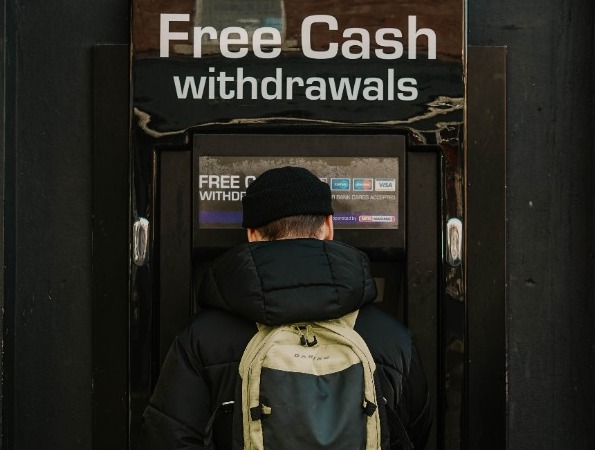

How can I avoid unnecessary conversion fees while overseas?
If you want to avoid unnecessary overseas card fees, such as Dynamic Currency Conversion (DCC), pay or withdraw in the local currency of the country you're in. And not in Sterling.
For example, if you withdraw money with your UK debit card at an ATM in Paris, France, you may be asked whether you would like the transaction converted to British Pounds.
Choose "pay in the local currency" (not British Pounds) or "without conversion".
The same applies to card machines at shops and retailers.
TIP: As a rule of thumb, when using your debit, credit or prepaid card overseas always choose to pay in the local currency (without conversion) when asked.
Should I get a travel card for holidays abroad?
Some debit and credit travel cards specialise in offering competitive exchange rates for certain currencies. You could also consider a prepaid travel card for your holidays. Some hold multiple currencies and provide competitive exchange rates, such as Currensea, Wise and FairFX.
Usually, card fees are located in the fees or travel section of your provider's website. Or otherwise in their terms and conditions.
TIP: Many travel cards (both debit and credit) and currency prepaid cards offer reduced, or even zero, foreign transaction and withdrawal fees and competitive exchange rates. But check all costs, including monthly or annual fees, to ensure you get a good deal.
In summary
Exchange rates are often forgotten when planning holidays. These rates will directly affect how much you get for your pounds while overseas, and it's certainly worth considering, especially if you want to keep costs down.
Check with your card provider if there are any restrictions, particularly in the places you plan to visit, and whether you need to let them know you will be using your card abroad. And if you're asked when paying by card or withdrawing money at a cash machine to pay with local currency or convert to British Pounds, choose local. Finally, don't forget to compare options to find the best prepaid cards for travel and everyday use to get the best value for your money.
We hope you enjoyed this guide! Don't forget to share with others using the links below.